Afternoon Tea Menu Ideas: How Much, What Order, What to Skip
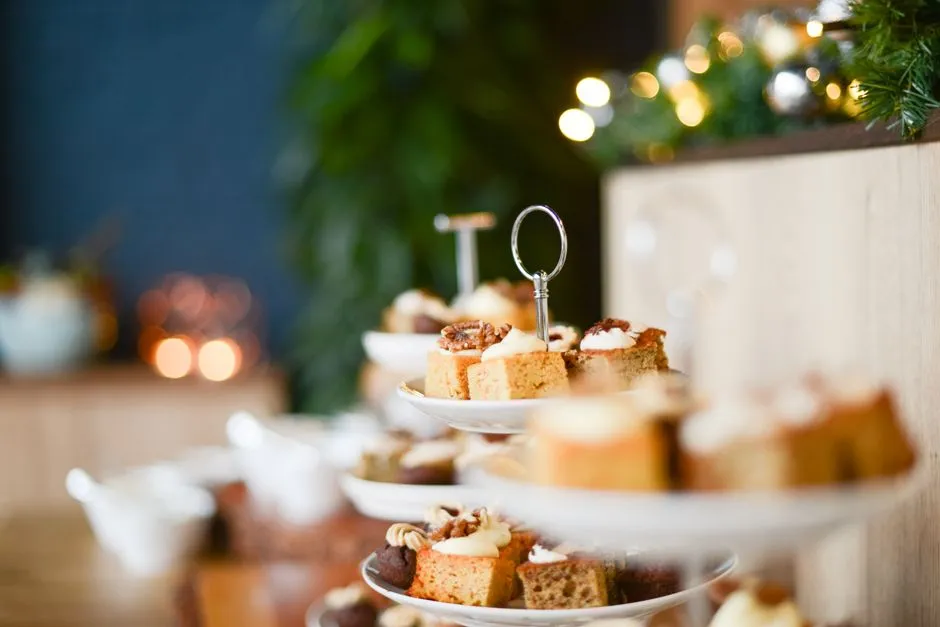
- What should be on an afternoon tea menu?
- What goes on each layer of an afternoon tea?
- How much food do you need for each guest?
- Should you make everything yourself?
- How do you host afternoon tea on a budget?
- Which dietary needs should you ask about before the day?
- How long can sandwiches and cream sit on the table?
- What do three sample menus look like?
- What can you skip?
- Sources
What should be on an afternoon tea menu?
An afternoon tea menu has three layers, eaten in this order: small savoury sandwiches, then scones with jam and cream, then two or three small sweet things, all served with a pot of tea. For a first tea at home, plan 4–6 sandwich fingers, 1–2 scones and 2–3 sweet items per guest. Bake one or two things yourself, buy the rest, and ask every guest about allergies and dietary needs when you invite them.
The rest of this page covers what to put on each layer, how to scale quantities without a fridge full of curling sandwiches the next day, where buying beats baking, and what to leave out. For the customs and history behind the meal, start with our introduction to afternoon tea.
What goes on each layer of an afternoon tea?
Think of the menu as three jobs. The sandwiches are the savoury start, so they should be light and clean-tasting. The scones are the warm, filling middle. The sweets are the finish, sized so a guest can try two or three without feeling defeated. Two or three choices per layer is plenty at home; more than that multiplies the work without making anyone happier.
| Layer | Classic ideas | Easy or cheaper ideas | Make ahead? |
|---|---|---|---|
| Sandwiches | Cucumber with butter or cream cheese; egg mayonnaise and cress; smoked salmon; ham and mustard | Cheese and pickle; tuna mayonnaise; grated carrot with hummus | Fillings the day before; assemble on the day |
| Scones | Plain or fruit scones with jam and clotted cream | Plain scones with jam and softly whipped double cream | Freeze unbaked rounds, bake on the morning |
| Sweets | Victoria sponge, shortbread, small tarts, fruit cake | Shortbread fingers, a loaf cake, good bought biscuits on a plate | Shortbread days ahead; sponge layers the day before |
Two ideas beyond the classics that add no work: a bowl of strawberries beside the cake for a lighter finish, and one larger cake cut into slim fingers instead of several small pastries. To decide which bakes to attempt at all, our afternoon tea bakes guide compares the work behind each one.
How much food do you need for each guest?
Start from the per-guest rule (4–6 sandwich fingers, 1–2 scones, 2–3 small sweets, 2–3 cups of tea) and scale it. The table below assumes each round of sandwiches (two slices of bread, filled) is cut into three fingers once the crusts are off, and that one batch of our scone recipe makes about 8 scones.
| Guests | Sandwich fingers | Sandwich rounds | Scones | Small sweets | Cups of tea |
|---|---|---|---|---|---|
| 2 | 8–12 | 3–4 | 2–4 (half a batch) | 4–6 | 4–6 |
| 4 | 16–24 | 6–8 | 4–8 (one batch) | 8–12 | 8–12 |
| 6 | 24–36 | 8–12 | 6–12 (one to two batches) | 12–18 | 12–18 |
| 8 | 32–48 | 11–16 | 8–16 (one to two batches) | 16–24 | 16–24 |
| 12 | 48–72 | 16–24 | 12–24 (two to three batches) | 24–36 | 24–36 |
Each round takes two slices of bread, so for six guests in the middle of the range, 30 fingers means 10 rounds, or 20 slices. Check the slice count on the bag before buying a second loaf.
To turn small sweets into bakes, count portions. One tin of our classic shortbread makes 16 fingers, and one Victoria sponge serves 8–10. For six guests, those two bakes together give 24–26 portions against the 12–18 you need, which is generous, and the shortbread that is left will keep.
How do you avoid waste?
Plan at the low end of each range if guests are coming straight from lunch or there are small children at the table, and at the high end if the tea replaces a meal. Then decide where any extra goes. Sandwiches cannot be kept for long once they have been out on the table (see the food-safety section below), so plan them tight. Scones freeze well, and plain shortbread keeps in an airtight tin for about a week, so if you want the table to look abundant, let the bakes that keep do that job.
Should you make everything yourself?
No. Ask two questions of each item: is homemade clearly better, and is it cheap and easy to make? If both answers are yes, make it. If not, buy it and put your energy elsewhere.
- Make the scones. They are best eaten warm on the day they are baked, and the ingredients are store-cupboard basics: our recipe uses 350g self-raising flour, 85g butter and about 175ml milk. Unbaked rounds can be frozen ahead and baked from frozen at 220C, adding 2 to 3 minutes to the usual time.
- Make the sandwiches. Shop sandwiches are cut for lunch, not for a tea table, and the fillings are the easiest part of the whole menu.
- Make one sweet bake if you enjoy it. Shortbread is built on a 3-2-1 ratio by weight of flour, butter and sugar, and can be baked days before.
- Buy the jam, the clotted cream and anything fiddly. Tarts, macarons and decorated small cakes are where a first-time host loses an afternoon. A bought cake on a nice plate is not cheating.
For a first tea, scones plus one other bake is a full programme. Spread the work across days rather than doing it all on the morning; our make-ahead timeline sets out what to do a few days before, the day before, and in the last hour.
How do you host afternoon tea on a budget?
The classic afternoon tea is built on cheap food: bread, butter, eggs, cucumber, flour and milk. The money goes on the extras, so that is where to economise.
- Choose the thrifty fillings. Cucumber, egg and cress, and cheese are all classic. If one filling has to go for cost, make it the smoked salmon.
- Bake the scones. A batch of eight is mostly flour, butter and milk, which makes it one of the cheapest things on the table.
- Swap the cream if you need to. Softly whipped double cream is a perfectly good partner for jam and scones when clotted cream is hard to find or over budget.
- One cake, cut small. A single sponge or loaf cut into slim fingers, plus a tin of shortbread, covers the sweet layer for six guests without buying several kinds of pastry.
- Tea bags are fine. Brewing matters more than format: black tea wants water at or near a full boil, around 90–100C, for 3–5 minutes. Our guide to brewing tea properly has the full chart.
- Borrow rather than buy. A teapot, a few extra cups and a cake plate are easier to borrow from a friend than to store afterwards.
Which dietary needs should you ask about before the day?
Ask when you send the invitation, not when guests arrive, so you have time to shop and plan. A plain question works: "Is there anything you can't eat, or would rather avoid?" Then look at the menu against the answers.
Allergies. UK food law names 14 allergens that food businesses must tell customers about, listed by the Food Standards Agency: celery, cereals containing gluten (such as wheat, rye, barley and oats), crustaceans, eggs, fish, lupin, milk, molluscs, mustard, peanuts, sesame, soybeans, sulphur dioxide and sulphites, and tree nuts. A typical tea table carries several of them at once: wheat in the bread, scones and cake; milk in the butter and cream; eggs in the sponge and the egg mayonnaise; fish in the smoked salmon; mustard in the ham sandwiches. Read the label on everything you buy, including the jam and the bread. The same FSA guidance warns that when cooking for someone with an allergy, "just taking it off their plate is not enough", so plan their food separately from the start.
If a guest shows signs of a severe allergic reaction, such as swelling of the throat and tongue or difficulty breathing, the NHS anaphylaxis guidance says to use an adrenaline auto-injector if they have one and call 999.
Coeliac disease and gluten-free guests. Buy gluten-free bread and bakes, plate them on their own, and give them their own butter and jam. Coeliac UK's cross-contamination guidance advises separate condiments to avoid breadcrumbs, or at least clean cutlery for shared butters, jams and spreads, and toaster bags or a separate toaster for gluten-free bread.
Pregnant guests. Two items on a classic menu need attention. The NHS guidance on foods to avoid in pregnancy says cold-smoked and cured fish, like smoked salmon, must be cooked until steaming hot, so a smoked salmon sandwich is not suitable; offer egg or cucumber instead. The same page says not to have more than 200mg of caffeine a day and estimates 75mg in a cup of tea, so put a caffeine-free option such as rooibos on the table alongside the black tea.
Vegetarian and vegan guests. Egg and cress, cucumber and cheese cover vegetarians without any changes. A vegan guest needs dairy-free spread, a plant-based cream and a bake made without eggs, butter or milk; for a first tea, a labelled vegan cake from the shop is far less stressful than adapting a recipe.
How long can sandwiches and cream sit on the table?
The closest official guidance to a home tea party is the Food Standards Agency's advice on providing food at community and charity events. It says chilled food, such as sandwich fillings served as part of a buffet, should be left out of the fridge for no more than four hours, and that in extremely hot weather food that has been out of the fridge should be used within 2 hours. After that, put what remains back in the fridge or throw it away. The same guidance says cakes and desserts containing fresh cream belong in the fridge, out for the shortest time possible.
At home, keep fillings in the fridge, which the FSA's chilling guidance says should be set between 0 and 5°C, until you assemble the sandwiches. Bring the cream and any cream-filled cake out when guests sit down, not while you are still laying the table. Serve sandwiches in two rounds rather than all at once if the room is warm.
What do three sample menus look like?
Classic tea for six. Cucumber, egg and cress, and ham and mustard sandwiches (10 rounds, 30 fingers). Twelve plain scones (one and a half batches) with strawberry jam and clotted cream. A Victoria sponge cut into fingers and a tin of shortbread. English breakfast tea, Earl Grey, and one caffeine-free option.
Budget tea for four. Cucumber and egg and cress sandwiches (7 rounds, 21 fingers). One batch of scones (8) with jam and whipped double cream. One tin of shortbread (16 fingers, with some left for the week). One black tea from bags, plus peppermint.
Mostly bought tea for eight. Homemade sandwiches in three fillings (14 rounds, 42 fingers). Bought scones, warmed briefly in a low oven, with bought jam and clotted cream. A bought cake and a plate of good biscuits. Two teas, brewed properly.
What can you skip?
- The three-tier stand. Three plates down the middle of the table do the same job and are easier to pass.
- A long tea list. One robust black tea, one lighter tea and one caffeine-free option is plenty. If you serve green tea, brew it cooler, around 70–80C, for 1–3 minutes.
- Decorated small pastries. The most time for the least return on a first attempt.
- Matching china. Every guest needs a cup, a saucer, a small plate and a napkin. Nobody checks whether they match.
One thing not to skip: if small children are at the table, keep the teapot and kettle back from the edge and pour hot drinks for them.
For more on entertaining around the tea table, browse our hosting section.