Gluten Free Afternoon Tea at Home: Swaps That Work
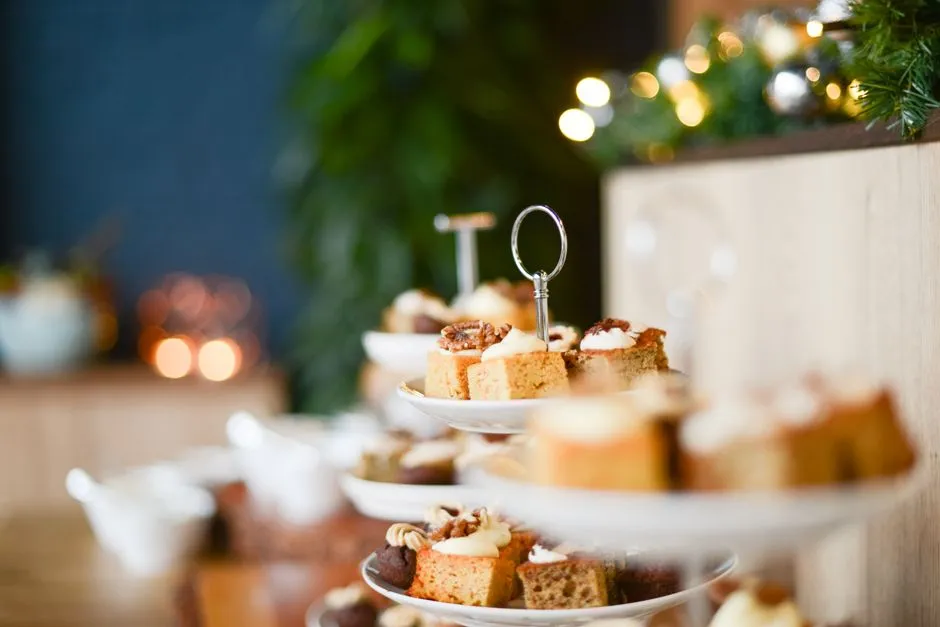
- How do you make a gluten-free afternoon tea at home?
- What does your guest actually need?
- Which parts of an afternoon tea are easy to swap?
- How do you make gluten-free scones for afternoon tea?
- Which classic bakes tolerate substitutes best?
- How do you avoid cross-contact when one kitchen makes both?
- What about milk for the tea?
- Sources
How do you make a gluten-free afternoon tea at home?
To host a gluten-free afternoon tea at home, ask the guest exactly what they avoid and how strictly, buy gluten-free bread for their sandwiches, bake or buy gluten-free scones, and choose one or two cakes that take a gluten-free flour swap well, such as shortbread or a lemon drizzle loaf. Make their food first in a freshly cleaned kitchen, plate it separately, and give them their own butter, jam and knife. Dairy-free guests need a plant-based spread, cream and milk instead.
You do not have to turn the whole table gluten-free or dairy-free. Cook one standard menu and a small parallel set of swaps, and keep the two apart.
What does your guest actually need?
Ask before you plan, not on the day. The Food Standards Agency's advice on cooking for someone with an allergy puts it plainly: "Your guest will have the best understanding of their specific allergy and will be able to help plan a suitable meal" (FSA).
"Gluten-free" and "dairy-free" each cover very different needs:
- Coeliac disease is, in the NHS's words, "a condition where your immune system attacks your own tissues when you eat gluten", and gluten is a protein found in wheat, barley and rye (NHS). For a coeliac guest, crumbs matter, so cross-contact (traces of gluten transferring from one food to another via boards, knives, hands or flour dust) is the main thing to manage.
- Milk allergy is an immune reaction to the proteins in milk. For any food allergy, the same FSA page warns that "just taking it off their plate is not enough", because an extremely small amount can be enough to cause a reaction.
- Lactose intolerance is a digestive problem with lactose, the sugar in milk. The NHS describes it as getting "symptoms, such as tummy pain, after eating food containing lactose" (NHS).
- Choice covers vegans and anyone who simply prefers to avoid gluten or dairy. Ask whether eggs and honey are fine too.
Four questions cover almost everyone: Is it an allergy, coeliac disease, an intolerance or a preference? Do traces and crumbs matter? Are oats, eggs, soya or nuts a problem? Is there a brand of bread or scone you already trust?
If a guest with an allergy shows signs of a severe reaction, such as a swollen throat or tongue or difficulty breathing, the NHS says to use their adrenaline auto-injector if they have one and "Call 999 for an ambulance" (NHS). Ask an allergic guest beforehand where they keep their auto-injector.
Which parts of an afternoon tea are easy to swap?
The same three courses described in our afternoon tea menu planning guide still apply. Here is where the effort sits.
| Course | Gluten-free swap | Dairy-free swap | Effort |
|---|---|---|---|
| Sandwiches | Shop-bought gluten-free bread | Dairy-free spread; skip cheese or use a labelled dairy-free one | Easy |
| Scones | Gluten-free self-raising flour, or buy a labelled pack | Dairy-free block spread and plant milk | Moderate |
| Clotted cream and jam | Jam usually needs no change; check the label | Plant-based thick or whipping cream | Easy |
| Cakes and biscuits | Choose bakes that tolerate gluten-free flour | Dairy-free block spread | Easy to moderate |
| Tea | Plain tea needs nothing; read labels on flavoured blends | A carton of plant milk on the tray | Easy |
Do not bake gluten-free bread for one guest. Buy a loaf they already like, and make their sandwiches before anyone else's.
How do you make gluten-free scones for afternoon tea?
Gluten-free scones are the moderate swap. A gluten-free self-raising flour blend can go into the same rub-in method as our classic scone recipe, but expect a different dough. King Arthur Baking's gluten-free scone recipe says the mixed dough "should be cohesive and very sticky", rests the portioned dough for 15 minutes before baking, and includes xanthan gum in the dry mix (King Arthur Baking). Xanthan gum is a binder that stands in for some of the structure gluten would normally give; many gluten-free flour blends already contain it, so check the packet before adding more.
Practical points that make the difference:
- Expect a soft, tacky dough. Do not keep adding flour to make it handle like a wheat dough; it will bake dry.
- Cut them thick. Gluten-free scones tend to rise less, so a tall starting round gives a better finished height.
- Check every packet. The same King Arthur page warns that "Some of your baking ingredients can be a hidden source of gluten." Read the label on the baking powder, the flour blend and anything else that goes in, looking for a gluten-free claim.
- Bake them on a fresh tray lined with new baking paper, before any wheat scones go in.
Shop-bought, labelled gluten-free scones, warmed through, are a perfectly good answer and keep most of the cross-contact risk out of your kitchen.
For a guest who is dairy-free as well, the same King Arthur recipe suggests that you "substitute margarine for the butter; and soy milk, almond milk, or rice milk for the milk", and notes that "Results may vary from the original." Choose a block baking spread labelled dairy-free rather than a soft tub, which is harder to rub in. Serve them with a plant-based cream in place of clotted cream.
Which classic bakes tolerate substitutes best?
Some bakes barely notice a swap; others depend on the very ingredient you are removing.
- Shortbread suits gluten-free flour well, because it wants as little gluten development as possible anyway, as our classic shortbread recipe explains. Dairy-free shortbread is harder: butter is most of the flavour, so a dairy-free version will taste noticeably different.
- Lemon drizzle loaf is forgiving. The syrup soak keeps a gluten-free crumb moist, and the drizzle itself is only lemon juice and sugar.
- Fruit tea loaf is close to dairy-free as written, because the classic loaf has no butter or oil in the batter. Swap in gluten-free self-raising flour for a gluten-free guest, and serve slices with a dairy-free spread instead of butter.
- Victoria sponge takes a gluten-free self-raising flour and a dairy-free block spread reasonably well, but the crumb is often more delicate. Fill it with jam and a dairy-free buttercream.
If you are adapting more than one recipe, make one swap per bake. Changing the flour and the fat at once leaves you guessing which one caused a problem.
How do you avoid cross-contact when one kitchen makes both?
This part matters most for a coeliac or allergic guest. Work through it in order.
- Clean first. The FSA advises: "Clean work surfaces and equipment thoroughly to remove traces of food you may have cooked or prepared before." Wash your hands before you start.
- Make the free-from food first, before any wheat flour, butter or cream comes out, then cover it and put it away.
- Wash tools normally. Coeliac UK says "Standard washing up liquid or using a dishwasher will remove gluten" and that you do not need separate cloths or sponges (Coeliac UK).
- Separate the spreads. Coeliac UK advises separate condiments "to avoid breadcrumbs, or at least use clean cutlery for shared butters, jams and spreads", and suggests separate bread boards and toaster bags.
- Do not rely on the oven. The FSA notes that heating does not remove the allergenic potential of food proteins at kitchen temperatures.
- Plate them apart. Give the guest their own plate or stand, set out before the shared one, and label it.
- Keep the packets. The FSA suggests keeping a note of the ingredients, or the packet itself, so you can answer questions.
Oats need a word of their own. Coeliac UK says "Uncontaminated oats that test at 20 parts per million (ppm) gluten or less may be labelled ‘gluten free’", and that "A very small number of people with coeliac disease may still be sensitive to gluten free oat products" (Coeliac UK). Ask before baking with oats.
What about milk for the tea?
Put a carton of plant milk on the tray next to the dairy jug, with its own spoon. Two cautions for an allergic guest: NHS Scotland's allergy network says "Lactose free products should NOT be used by people allergic to cow's milk either", and that "some people allergic to cow's milk will also be allergic to soya" (CYANS, NHS Scotland). Almond milk brings tree nuts to the table, and for a guest who is coeliac as well, an oat milk should carry a gluten-free label. The simplest answer is to ask which one they drink at home and buy that.