Loose Leaf Tea vs Tea Bags: When the Difference Matters
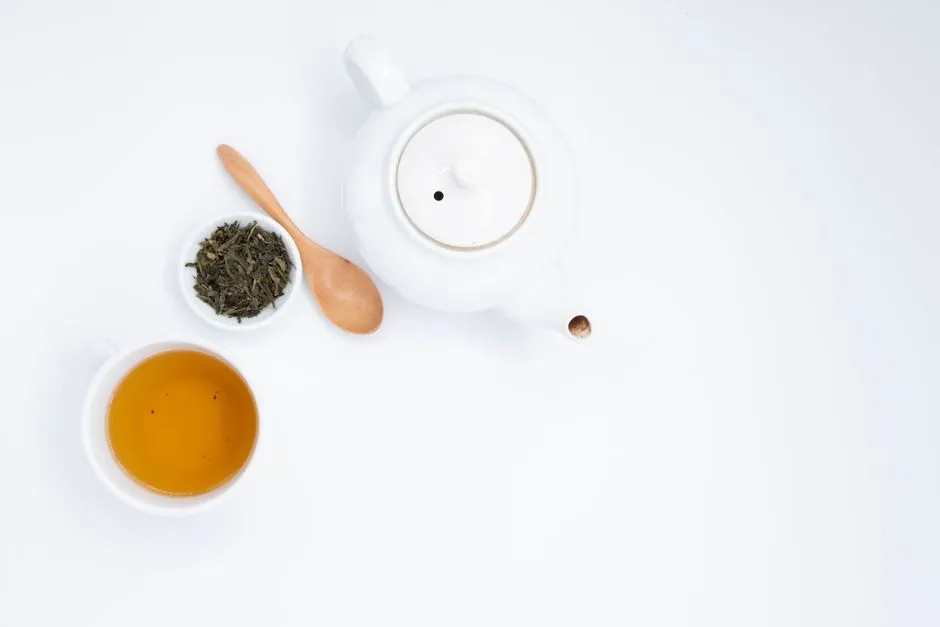
- Loose leaf tea vs tea bags: which is better?
- What is actually different about the tea inside a bag?
- Does the bag itself change the flavour?
- What kit does loose leaf really need?
- Is loose leaf tea worth it on cost per cup?
- How should you store loose leaf tea?
- When is a tea bag the sensible choice?
- How can you try loose leaf without committing?
- Sources
Loose leaf tea vs tea bags: which is better?
Loose leaf tea is usually the better choice when you want aroma and a cup that tastes different from one tea to the next, because larger leaves have room to unfurl and give up their flavour gradually. Tea bags win on speed, strength with milk and tidiness, because most hold small, fast-brewing pieces of leaf. The difference matters most for green, white, oolong and whole-leaf black teas, and least for a strong mug with milk.
Nobody needs to feel told off for using bags. The UK Tea & Infusions Association puts the share of British tea consumed from a teabag at 97.5%. The useful question is not which format is "proper", but where switching actually changes your cup.
What is actually different about the tea inside a bag?
Mostly the size of the pieces. Tea is sorted into grades by leaf size, and a tea shop owner quoted by Country & Town House said that, generally speaking, bags use the low grades: "fannings" (small broken fragments) and "dust" (finer particles still). Tea bags often use CTC teas for the strength and body they give, a Tetley representative told the same feature. CTC, short for "crush, tear, curl", is a machine process that cuts the leaf into small, hard granules rather than rolling it whole.
Small does not mean scraps. In that feature, the Tetley representative also said teabag and loose tea "come from the very same leaves" and called the idea of factory-floor sweepings a misconception. A Fortnum & Mason representative in the same piece explained that CTC creates fine leaf with a larger surface area, which "brews faster, but loses some of its flavour."
That trade-off is the whole story in one line. More surface area means colour, strength and tannin (the compounds behind bitterness and that dry, puckering feel) all arrive quickly. Larger leaves release their flavour more slowly and in more layers, and many whole-leaf teas can be steeped two or three times. Small broken leaf tends to give most of what it has in the first brew.
Does the bag itself change the flavour?
It can, in two ways: space and material.
Space. A standard flat bag packs the leaf tightly, which is fine for small CTC granules that only need contact with water. A large leaf, though, needs room to open out. Loose in a pot or a roomy basket infuser, water reaches all of it; squashed into a small bag, much of it never fully opens. Larger pyramid-shaped bags sit in between, giving more room than a flat square.
Material. According to the UK Tea & Infusions Association, the vast majority of tea bags on the market today are made from paper and plant-based materials. Some use a little plastic to heat-seal the edges, typically polypropylene or nylon and increasingly PLA, a plant-based bioplastic. The association says that, tea included, typically about 1% of a tea bag's total weight is plastic (around 0.04g).
Bags made entirely of plastic mesh are a different matter. A McGill University study found that a single plastic teabag at brewing temperature released about 11.6 billion microplastic and 3.1 billion nanoplastic particles into the water. The researchers stated that the possible health effects of ingesting these particles are currently unknown. If that sits badly with you, paper bags and loose leaf both avoid the question.
What kit does loose leaf really need?
Less than the shop displays suggest:
- Something that gives the leaves room. A basket infuser that sits deep in your mug, a teapot with a built-in strainer, or any teapot plus a small tea strainer. Skip tiny ball infusers: they cram the leaf into a tight knot.
- A teaspoon. Start with one rounded teaspoon, roughly 2–3g, per 200–250ml cup.
- A timer. Your phone is fine. Set it, walk away, and take the leaves out when it sounds.
- An airtight tin. More on that below.
A variable-temperature kettle is a nice extra, not a requirement. Our guide to brewing tea by type explains how to get green tea down to 70–80°C and keep black tea at 90–100°C with an ordinary kettle.
Boiling water and a full teapot can cause serious scalds. Pour slowly, hold the lid while you pour, and keep the pot and kettle back from the edge of the counter or table where children can reach.
Is loose leaf tea worth it on cost per cup?
Sometimes. The honest way to tell is to compare price per gram, not price per box, because pack sizes vary wildly.
For loose leaf, divide the pack price by its weight in grams, then multiply by the grams you use per cup. As an illustration only (not a real price): a 100g pouch costing 8 units of your currency works out at 0.08 per gram, so a 2.5g cup costs 0.20. If that tea gives a good second steep, the same leaf makes two cups and each cup costs 0.10.
For bags, divide the pack's net weight by the number of bags to find the grams per bag, then compare the price per bag directly.
A few general patterns hold. Everyday loose black tea is not automatically dearer than bags, while specialist whole-leaf teas cover a far wider price range. Re-steeping narrows the gap, and so does measuring: with loose leaf you can use less for a small cup instead of a whole bag.
How should you store loose leaf tea?
Tea does not like air, light, damp, heat or strong smells, and loose leaf is more exposed to all of them than individually wrapped bags. Keep it in an opaque, airtight tin in a cool, dry cupboard, away from the kettle, the hob and the spice shelf. Tea picks up smells easily, so do not store it next to coffee or anything pungent.
Buy in amounts you will finish while it still smells lively. Old tea is not usually unsafe, just flat; a dull, papery aroma tells you it is past its best. Throw out any tea that has got damp or smells musty. The same rules apply to an opened box of bags, which sheds aroma faster once the outer wrap is gone.
When is a tea bag the sensible choice?
Plenty of the time:
- A strong mug with milk and sugar. Fast-brewing CTC tea is built for exactly that, and loose leaf adds little.
- Work, travel and quick single cups, where there is no sink nearby or no time for straining and rinsing.
- A tight budget, where a good everyday bag brewed with the right water and timing will beat an expensive loose tea brewed badly.
For a proper afternoon tea, though, a pot of loose leaf is worth the extra minute. If you are planning one, our guide to what afternoon tea is and how to host it covers the menu and the order of things.
How can you try loose leaf without committing?
You can test the difference for the price of one small pack and no new kit:
- Start with a tea you already drink. If your usual bag is an English breakfast, buy a loose English breakfast or Assam so the comparison is fair.
- Buy the smallest pack available. A small pouch, not a large caddy.
- Use what you own. A teapot and a fine sieve, or even a jug and a sieve, is enough for a first try.
- Brew side by side. Same water, same temperature, same time, one cup from the bag and one from the leaf. Taste both before adding milk.
- Then try the teas where loose leaf shines. A whole-leaf green or oolong shows the gap far more clearly than a breakfast blend. Brew green tea at 70–80°C rather than boiling, or it will taste harsh whichever format you use.
Give it a week or two. If you keep reaching for the tin, buy a roomy infuser; if not, you have lost very little. There is more brewing help in our tea guides.