Fruit Tea Loaf Recipe: Soak Overnight, Bake, Wait a Day
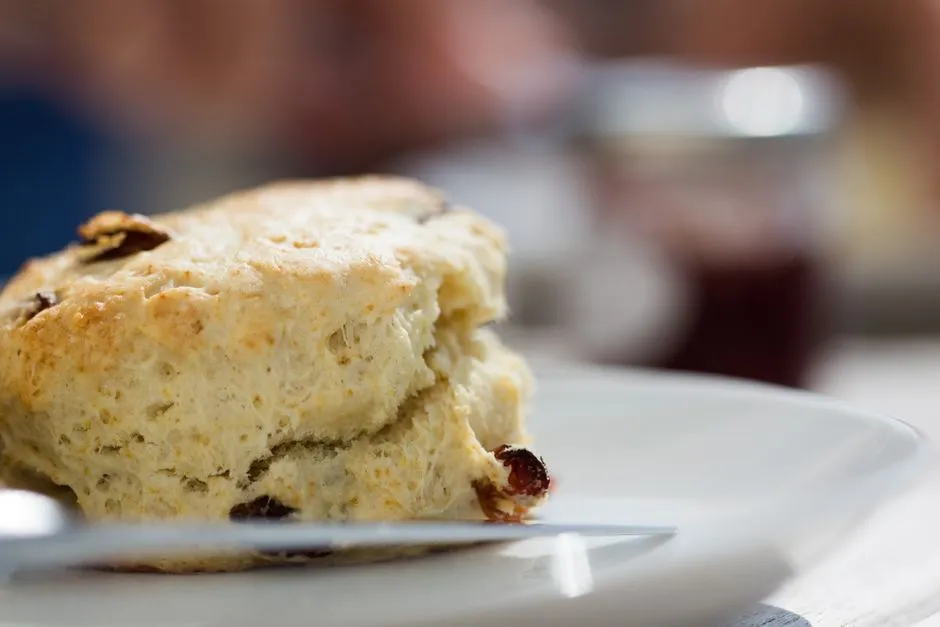
- How Do You Make a Fruit Tea Loaf?
- What Is a Tea Loaf, Exactly?
- What Do You Need?
- Why Does the Fruit Have to Soak Overnight?
- Which Tea Is Best for Soaking Fruit?
- How Do You Make It, Step by Step?
- How Do You Know When a Dense Fruit Loaf Is Done?
- Why Is a Tea Loaf Better the Next Day?
- How Do You Serve a Tea Loaf?
- Sources
How Do You Make a Fruit Tea Loaf?
A fruit tea loaf is a dense, sliceable cake made by soaking dried fruit and sugar in strong hot tea overnight, then stirring in an egg, self-raising flour and spice the next day. There is no butter or oil in the batter. Soak 350g mixed dried fruit and 100g brown sugar in 250ml strong black tea for at least 8 hours, mix in 1 egg, 225g self-raising flour and 1 tsp mixed spice, and bake in a 900g (2lb) loaf tin at 180C (160C fan, gas mark 4, 350F) for 50–60 minutes.
The hands-on time is about ten minutes on each of two days. The soak does most of the work.
What Is a Tea Loaf, Exactly?
A tea loaf, also sold as tea bread, is described in Wikipedia's tea loaf entry as an English bread "made with dried fruit and traditionally served sliced and spread with butter," and one "particularly associated with Yorkshire." The same entry names the Welsh bara brith and the Irish barmbrack as similar breads.
The defining feature is what is missing. The entry notes that "a key feature of tea bread is the lack of fat in the recipe," and links that to better keeping. The tea-soaked fruit supplies the moisture that butter and milk would supply in an ordinary cake, which is why the soak cannot be skipped.
What Do You Need?
For one 900g (2lb) loaf, about 10 slices:
| Ingredient | Quantity | Notes |
|---|---|---|
| Mixed dried fruit | 350g (12oz) | Sultanas, raisins and currants; up to 100g of it can be chopped apricots or mixed peel |
| Black tea | 3 tea bags or 3 tsp loose leaf | Made strong, without milk |
| Water, just boiled | 250ml | For brewing the tea |
| Light or dark brown soft sugar | 100g (3½oz) | Dark gives a deeper, more treacly loaf |
| Egg | 1 large | Beaten |
| Self-raising flour | 225g (8oz) | White or wholemeal |
| Mixed spice | 1 tsp | Or ground cinnamon |
You also need a large bowl, a plate or cover for it, a 900g (2lb) loaf tin and baking parchment.
Why Does the Fruit Have to Soak Overnight?
Dried fruit is, by definition, short of water. Stirred dry into a batter, it takes moisture from the crumb around it as it bakes, and a low-fat batter has little to spare. Soaked first, the fruit arrives already plump, and the tea it did not absorb becomes the liquid in the batter.
The traditional method starts with hot tea. Wikipedia's entry describes the fruit being "soaked in initially hot tea to plump it," then left "for several hours, or overnight." The British Heart Foundation's fruity teabread recipe uses the same approach, telling you to "cover and leave to soak at room temperature for at least 8 hours or overnight, until fruit is plumped up."
A soak started after dinner is ready to bake the next day.
Which Tea Is Best for Soaking Fruit?
Black tea is the standard choice, and a robust everyday blend is ideal because it has to hold its own against brown sugar and spice. The British Heart Foundation recipe suggests "Darjeeling or breakfast tea," and Wikipedia's entry notes that Earl Grey "or other teas can also be used."
- Breakfast blends or Assam: a malty, strong background flavour. The safest starting point.
- Earl Grey: bergamot gives the loaf a citrus note that suits mixed peel or orange zest.
- Darjeeling: lighter and more floral; brew it on the strong side.
- Rooibos or a fruit infusion: a caffeine-free option. Rooibos in particular gives a gentle, honeyed background.
In our judgement, delicate green and white teas are wasted here: their flavour is largely lost under the sugar and spice.
Brew the tea as you would for drinking strong, following the temperatures in our guide to brewing tea: black tea at 90–100C, steeped 3–5 minutes. For extra strength, use more leaf rather than a longer steep, which mostly adds bitterness. Three bags in 250ml for 5 minutes gives a properly strong brew.
How Do You Make It, Step by Step?
Day one: the soak.
- Brew the tea with 250ml just-boiled water for 5 minutes, then remove the bags or strain out the leaves.
- Put the dried fruit and sugar in a large bowl and pour the hot tea over. Stir until the sugar dissolves. Hot tea can scald: pour it slowly, close to the bowl.
- Cover the bowl and leave it at room temperature for at least 8 hours or overnight.
Day two: the bake.
- Heat the oven to 180C (160C fan, gas mark 4, 350F). Grease the loaf tin and line it with a strip of parchment that hangs over both long sides.
- Stir the beaten egg into the soaked fruit, including any tea left in the bowl.
- Add the flour and spice and mix until no dry flour remains. The batter will be thick and heavy with fruit.
- Scrape it into the tin and level the top.
- Bake for 50–60 minutes. Start checking at 50 minutes. If the top is browning well before the middle is done, lay a sheet of foil loosely over it.
- Use oven gloves to lift the tin out. Leave the loaf in the tin for 10 minutes, then lift it out by the parchment onto a wire rack and let it cool completely.
How Do You Know When a Dense Fruit Loaf Is Done?
The usual test is a skewer pushed into the centre. The British Heart Foundation recipe bakes its loaf "until browned on top and a skewer inserted into centre comes out clean."
Fruit complicates that test. A skewer that passes through a soft sultana comes out sticky even when the cake is fully baked, and one that slips between fruit can come out clean from an underbaked middle. King Arthur Baking says that when a quick-bread batter is "textured" with "added chips or dried fruit," the toothpick test "is unreliable," and notes that "oftentimes the first insertion doesn't yield any telltale wet batter, but the second one does." So test in two or three places. Shiny, wet batter means more time; a smear of fruit does not.
A digital thermometer settles it. King Arthur's guidance for quick breads is that the centre "will register between 200°F and 205°F" (about 93–96C), and "no part of your loaf should be below 200°F." Push the probe straight down through the top centre and read it on the way out.
Why Is a Tea Loaf Better the Next Day?
A freshly baked tea loaf is good. A day later, wrapped, it is firmer and much easier to slice thinly without crumbling. Wikipedia's entry records that "the flavour is often considered to improve with time."
Once the loaf is completely cold, wrap it tightly in foil, or in baking parchment inside an airtight tin, and leave it a day before cutting. The British Heart Foundation says its teabread "will keep for a few days, if you wrap it in foil once cooked," and that "you can also freeze it for up to 1 month." Slices freeze well individually, so you can take out one or two at a time.
How Do You Serve a Tea Loaf?
Cut thick slices with a serrated knife and spread them with butter. The butter that is not in the batter goes on top, and that contrast is the point.
A tea loaf earns its place on an afternoon tea table because it can be finished days ahead. It is one of the three bakes in our guide to afternoon tea bakes, and if you are planning the whole spread, our introduction to afternoon tea covers what usually goes on the table.